Best HVAC Schools.com

Best HVAC Schools in Alabama (2026)

Six of the accredited HVAC programs in Alabama sit inside community and technical colleges, and the seventh is a training centre run by the state electric utility. Which one you pick carries unusual weight here. Graduating from a board-approved curriculum replaces the 3,000-hour experience requirement outright rather than partly, so the program decides whether you sit the certification exam now or in a year and a half.

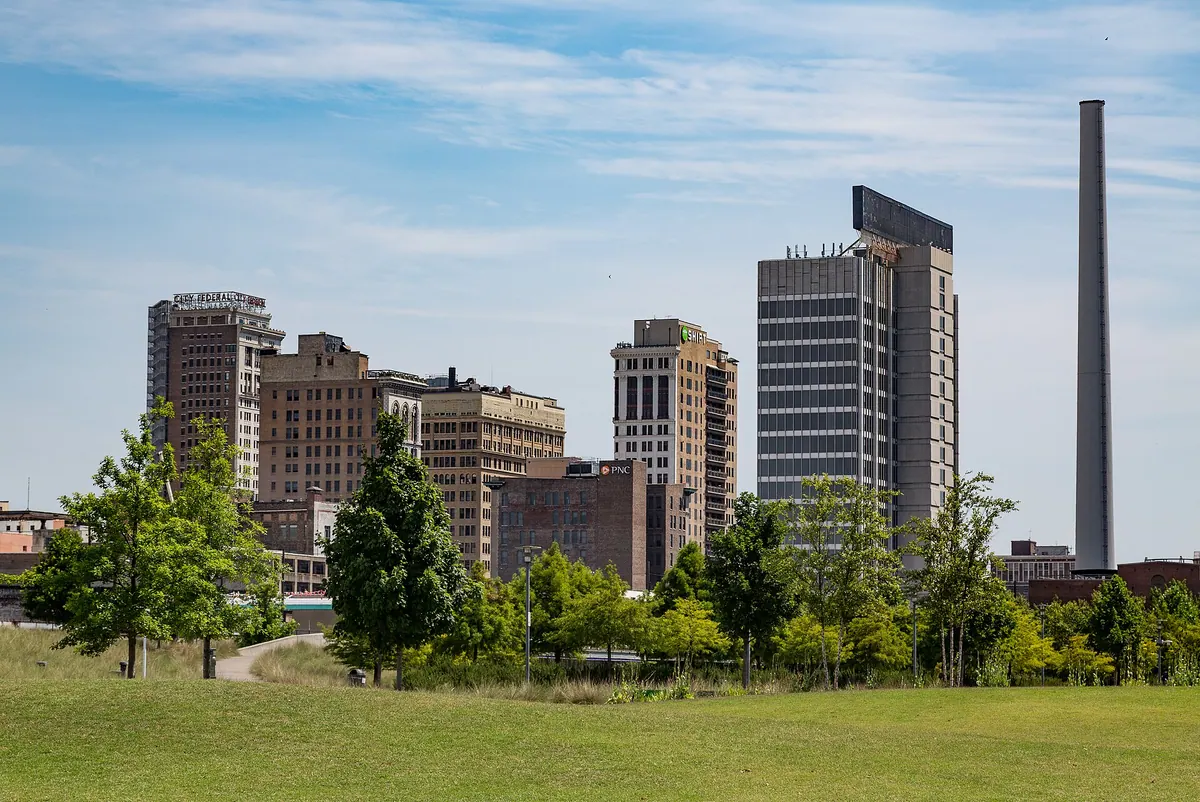
The Birmingham, Alabama skyline
Birmingham skyline. Photo by Tony Webster, licensed under CC BY-SA 2.0, via Wikimedia Commons.
7 Accredited HVAC schools
$48,370 Median wage, AL
8,260 Jobs in AL

On this page

HVAC programs

Accredited HVAC schools and programs in Alabama

Alabama has 7 accredited HVAC schools, each of them accredited by HVAC Excellence or PAHRA. Ranks are national: an HVAC program shown at 6th sits 6th among all accredited HVAC programs in the country, not 6th in Alabama. Of the 7, one names EPA Section 608 preparation where they describe the program and none hold both accreditations. These HVAC programs list their length, cost and credential wherever the school publishes them.

#1

Alabama Power (all campuses)

Verbena, AL · Jasper, AL · Utility Training Facility

81/100 ranking score
Credential Industry certifications
Accreditation PAHRA , Partnership for Air-Conditioning, Heating, Refrigeration Accreditation
EPA 608 prepState licence routeNATE

The HVAC Fast Track at Alabama Power's training center in Jasper compresses installation and service training into three to four months, with classes running Monday through Thursday from 8am to 4pm. Participants earn EPA Section 608 refrigerant certification along with other employment-ready credentials, and employers are traditionally invited on the final day to interview graduating candidates.

Enrollment is open to high school or GED graduates age 18 and older, and seating is limited, so interviews may be used to decide who gets in. The center itself has trained more than 38,000 participants from 45 states and three countries since 1986, and its course list runs from basic HVAC and refrigeration through advanced classes, state board review, and NATE review.

Working technicians can use the center for shorter goals: a review course covering the books and materials for the State of Alabama HVAC Contractor's Certification Exam, a five-hour Refrigerant Recovery Certification class followed by a proctored exam, NATE residential and light commercial exams, and Duct and Envelope Tightness Verifier training.

One HVAC school program covers all 2 campuses, so this description applies to each. Class times and local detail differ, so confirm with the campus you would attend.

Sources: Alabama HVAC school program, EPA Section 608, NATE.

#2

Gadsden State Community College

Anniston, AL · Public Post-Secondary

77/100 ranking score
Credential Associate's
Accreditation PAHRA , Partnership for Air-Conditioning, Heating, Refrigeration Accreditation
ApprenticeshipState licence route

Gadsden State's A.A.S. in Air Conditioning and Refrigeration runs at its Ayers and East Broad campuses in Anniston, Alabama. The degree takes a minimum of 76 credit hours, at least 61 of them technical and 15 general education. Admission requires a high school diploma or GED. The public college graduates about 30 HVAC students a year, and the program holds PAHRA accreditation.

The course list includes ACR 134 Ice Machines, ACR 130 Computer Assisted HVAC Troubleshooting, Building Automation and Engineering I and II, and a review course for the contractors exam. Students can also earn credit through an HVAC apprenticeship or internship course and a series of co-op courses. The published plan of study does not list cost, schedule, or placement figures.

Sources: Alabama HVAC school program, PAHRA, IPEDS.

#3

Bevill State Community College

Sumiton, AL · Public Post-Secondary

77/100 ranking score
Credential Associate's
Accreditation PAHRA , Partnership for Air-Conditioning, Heating, Refrigeration Accreditation
ApprenticeshipState licence route

An Associate in Applied Science in Air Conditioning and Refrigeration Technology is what Bevill State offers, taught on both the Hamilton and Sumiton campuses and totaling 67 to 68 credits. The core is 39 credits of ACR coursework, moving from principles of refrigeration and piping practices through electrical circuits and components to heat load calculations, residential air conditioning, heat pumps, and commercial refrigeration.

Students round out the technical side with four electives chosen from a list of twelve, and the choices signal different paths: an HVAC apprenticeship or internship course for those who want field time, a review course for the contractors exam, NCCER Core for construction credentialing, and specialty classes in ice machines, commercial air conditioning, propane systems, and troubleshooting.

Because this is a degree rather than a certificate, 15 to 16 credits of general studies are built in: English composition, math at the MTH 116 level or higher, a natural science or math elective, a history or social science elective, and a humanities or fine arts elective, plus a one-credit student survival skills orientation course. The catalog does not list program length in semesters, so plan the schedule with an advisor.

Sources: Alabama HVAC school program, NCCER, IPEDS.

#4

J. F. Drake State Community and Technical College

Huntsville, AL · Post Secondary

77/100 ranking score
Credential Associate's
Accreditation HVAC Excellence , a program of the ESCO Group
Apprenticeship

Drake State's heating and air conditioning program in Huntsville leads to an Associate in Applied Science, with a Heating and Air Conditioning/Refrigeration Certificate and a Short Certificate available for those who want a quicker exit. The program carries programmatic accreditation from HVAC Excellence, a third-party review that validates the curriculum against industry standards for entry-level work.

Coursework centers on the principles of heating and cooling air in controlled situations, with electricity and refrigerants taught through problem-solving so students can diagnose malfunctions and service residential, commercial, and industrial systems. The college pitches the credential toward jobs as a service technician, facility maintenance supervisor, lab technician, or eventually an owner of a heating and air business.

On earnings, the college cites Lightcast Economic Modeling's median salary of $48,886 for heating and air conditioning careers, with the usual caveat that location, certifications, and years in the field move that number substantially. Program length, tuition, and specific course requirements are not published on the program page, so build in time to request those details before committing.

Sources: Alabama HVAC school program, HVAC Excellence, IPEDS.

#5

Wallace State Community College

Hanceville, AL · Post Secondary

69/100 ranking score
Credential Certificate and degree
Accreditation HVAC Excellence , a program of the ESCO Group
InternshipEvening or part-time

Students at Wallace State in Hanceville can take HVAC and refrigeration classes during the day or in the evening, working toward an Associate in Applied Science, a certificate, or short-term certificates. The college describes its program as among the oldest continually operating HVAC/R training programs in Alabama, covering the mechanical, electrical, and scientific principles common to all HVAC/R systems.

A practical draw is the internship arrangement: Wallace State maintains partnerships with local companies, and students can begin part-time work through the internship schedule after completing the first half of the program. That structure lets a student earn in the trade while finishing coursework, and the program says it prepares graduates to pursue industry certifications alongside technical, craft, and business skills.

Wallace State cites Bureau of Labor Statistics figures: employment of heating, air conditioning, and refrigeration mechanics is projected to grow 8 percent from 2024 to 2034, with about 40,100 openings a year, and a median annual wage of $59,810 as of May 2024.

Sources: Alabama HVAC school program, BLS OEWS.

#6

Calhoun Community College

Tanner, AL · Post Secondary

63/100 ranking score
Credential Certificate and degree
Accreditation HVAC Excellence , a program of the ESCO Group

Calhoun's Associate of Applied Science with a concentration in Air Conditioning and Refrigeration trains students to install and repair equipment in office buildings, factories, homes, food stores, restaurants, and theaters, with practical work in cutting pipe, maintenance, and load and duct design. The curriculum also reaches into building automation systems and building science alongside residential and commercial construction.

Four short-term certificates offer faster routes: a general Air Conditioning and Refrigeration certificate, ACR Fundamentals, Advanced ACR, and HVAC Building Automation and Engineering. Each consists of three or more courses in a focused area, and the college positions them for people changing careers or updating an existing skill set rather than starting a full degree.

Costs and credit counts are not published on this program page, but Calhoun links regional career and salary research for each credential, covering job titles, salaries, and annual openings in its area. The college adds that employment of heating, air conditioning, and refrigeration mechanics and installers is projected to grow at a much faster pace than the average for all occupations from 2019 to 2029.

Sources: Alabama HVAC school program.

#7

Lawson State Community College

Bessemer, AL · Post Secondary

63/100 ranking score
Credential Certificate and degree
Accreditation HVAC Excellence , a program of the ESCO Group

Three credential levels are on offer at Lawson State's Bessemer campus: a 25-credit short certificate that takes two semesters, a 52-credit certificate, and a 76-credit Associate in Occupational Technologies degree that pairs air conditioning and refrigeration with a minor in industrial electronics. The AOT is built for students who want to graduate as multi-skilled technicians with a primary and a secondary technical specialty.

Classes are capped at 20 students, and instruction takes place on standard equipment used in the industry. The coursework covers how to determine the best system for a particular environment, how to get maximum efficiency out of that system, and how to troubleshoot it, aimed at careers in the design, sales, installation, maintenance, and service of residential and commercial equipment.

For the job market, Lawson State cites a $48,000 median salary in 2022 and 5 percent expected growth nationwide from 2021 to 2031. Related trades at the college include building construction, welding, and a short-certificate plumbing program, options worth a look for anyone comparing mechanical trades, and the college points students toward its application and financial aid resources as the next step.

Sources: Alabama HVAC school program.

Willing to travel? Compare these Alabama HVAC programs against the best HVAC schools and programs nationally, or browse HVAC programs in another state.

School instead of hours

Does HVAC school replace work experience in Alabama in 2026?

HVAC school replaces work experience in Alabama completely. The statute makes an applicant eligible to sit the certification exam with either 3,000 hours of work experience as defined by the board, or graduation from an approved heating, air conditioning or refrigeration curriculum. It is an either-or, not a sliding scale, so an approved graduate needs no logged hours at all.

Three thousand hours is roughly a year and a half of full-time work, so the substitution is worth real time. The board publishes a named list of approved curricula and states that candidates holding a long certificate from any Alabama public two-year or community college are approved. Several out-of-state programs appear on the list as well, along with industry training providers.

The practical advice is to confirm your specific program against the board's current approved list before you enrol on this basis, rather than assuming an HVAC program qualifies because it is accredited. Approval here is a separate judgement by the Alabama board, and it is the thing the exam application will check.

Replaced by an approved curriculum Hours you still have to work Hours of experience needed to sit the exam
Approved curriculum 3000 years No approved program 3000 years

Sources: Alabama board law, rules and regulations.

The certification

Do you need a license to work as an HVAC tech in Alabama in 2026?

You need Alabama certification to run HVAC work, not to do it as an employee. State law bars anyone from advertising, soliciting, bidding, obtaining permits or performing the function of a certified contractor unless the person in responsible charge is certified. A technician working under a certified contractor does not hold their own certificate.

The Alabama Board of Heating, Air Conditioning and Refrigeration Contractors issues two certifications: Certified Heating and Air Conditioning Contractor, and Certified Refrigeration Contractor for commercial refrigeration work. Each can be held active or inactive, and an inactive holder may not buy local licenses or be issued permits. A separate registration covers duct air tightness testing.

Beyond the experience or schooling requirement, applicants sit a written exam before the board and post a $20,000 performance bond. The written exam costs $175 and initial certification $220 a year. Uniquely among the boards researched for this site, Alabama offers a practical hands-on exam as an alternative after a failed written attempt, available within six months, at $375.

Sources: Alabama HVACR Contractors Board, Alabama board law, rules and regulations.

What counts as HVAC work

What work requires an Alabama HVAC certification in 2026?

Alabama certification covers more work than most people expect, and this catches businesses out. The rules extend it to air duct cleaning services, filter changing services, test and balance services, and cleaning heating, air conditioning or refrigeration equipment. A duct cleaning business in Alabama needs a state HVAC contractor certificate. So do realty management companies servicing other people's property, and anyone doing HVAC work on pre-owned manufactured or modular homes.

The exemptions run the other way and are equally specific. Motor vehicles, residential refrigerators and ice machines, household appliances and farm equipment sit outside it. So do poultry operations, meaning hatching, primary or further processing of chicken, turkey or other fowl, which is a carve-out that reflects the shape of Alabama's economy. LP-gas licensees doing LP appliance work are also exempt.

Cities may charge you but may not retest you. State law bars counties, municipalities and other local entities from requiring further local testing of certified contractors, subject to paying applicable local privilege, license or business fees. It works in the other direction too: a local official issuing business licenses must inspect the board's certificate of qualification first.

Sources: Alabama board law, rules and regulations.

Keeping it current

How often do you renew an Alabama HVAC certification in 2026?

An Alabama HVAC certification renews every year, by 31 December, and it lapses automatically at 11:59 that night if you have not renewed. That is a harder deadline than most states set, and the late fee after 31 December is $250.

Continuing education is at least four hours a year, submitted before 1 November, awarded in two-hour increments up to eight, and up to four hours may be carried into the following year. Your first year after initial certification is exempt. Inactive holders aged 65 and over are also exempt, though returning to active status then requires eight hours. Active licensees do not get the age exemption.

One more requirement is easy to overlook because it is not about competence at all: licensees must display their certification number and company name on all documentation, all advertising, and all service and installation vehicles.

Alabama pay

How much do HVAC techs make in Alabama in 2026?

HVAC techs in Alabama make a median of $48,370 a year, about $12,600 below the national median of $61,010 and among the lowest medians in the country for the trade. The Bureau of Labor Statistics counted 8,260 HVAC technician jobs in the state in its May 2025 wage survey, a substantial workforce for a state of Alabama's size.

The bottom 10 percent earn $33,720 or less and the top 10 percent earn $71,880 or more, with the middle half between $39,890 and $59,900. The whole distribution sits low: Alabama's 90th percentile is below the national median plus $11,000, and its 75th percentile is under the national median. Anyone weighing Alabama training against work in a neighbouring state should look at those numbers alongside cost of living rather than in isolation.

Alabama United States Annual wage by percentile
10th $36,510 $40,050 25th $40,340 $48,360 Median $48,370 $61,010 75th $60,020 $77,060 90th $65,690 $95,210

Sources: BLS OEWS.

Pay detail

Alabama HVAC pay, top to bottom

Alabama HVAC pay runs from the bottom tenth to the top in the table below, and the median is only one number in that range. The state sits below the national median of $61,010. All figures are annual, from the Bureau of Labor Statistics OEWS release of May 2025 for occupation 49-9021.

PercentileALUnited States
10th $36,510 $40,050
25th $40,340 $48,360
Median $48,370 $61,010
75th $60,020 $77,060
90th $65,690 $95,210

8,260 HVAC jobs in AL. OEWS is a wage survey and carries no employment projections

Sources

Where our Alabama HVAC school and program data comes from

Our Alabama HVAC school and program data comes from the sources listed below, each one linked so you can check it: the state's own board or statute for licensing, federal filings for the schools, the Bureau of Labor Statistics for wages, and each school's own published program page. Licensing research was verified 2026-07-30.

Alabama Board of Heating, Air Conditioning and Refrigeration Contractors
hacr.alabama.gov
Board law, rules and regulations (revised October 2024)
hacr.alabama.gov
How to get licensed, fees and bond
hacr.alabama.gov
Continuing education requirements
hacr.alabama.gov
Alabama HVAC school programs
Each school's own published program, linked on its card

Licensing research verified 2026-07-30. Rules change, so confirm with the state board before enrolling

Other states

HVAC schools and programs in other states

HVAC schools and programs in other states are worth comparing, because licensing changes at the state line and a program that shortens the route to a license in Alabama may count for nothing one state over. Each page below covers that state's own rules, its pay, and the accredited HVAC schools in it.

A state appears here once its licensing rules have been read from that state's own board or statute. See all HVAC schools and programs by state or the national ranking.