Best HVAC Schools.com

Best HVAC Schools in New York (2026)

New York accredits exactly one HVAC program and a heating and air conditioning contractor runs it as employer training, which tells you most of what you need to know about the state. New York has no state HVAC licence and New York City does not have one either. In the city the work is divided among licences named for other trades, so what you need depends on which part of the system you touch.

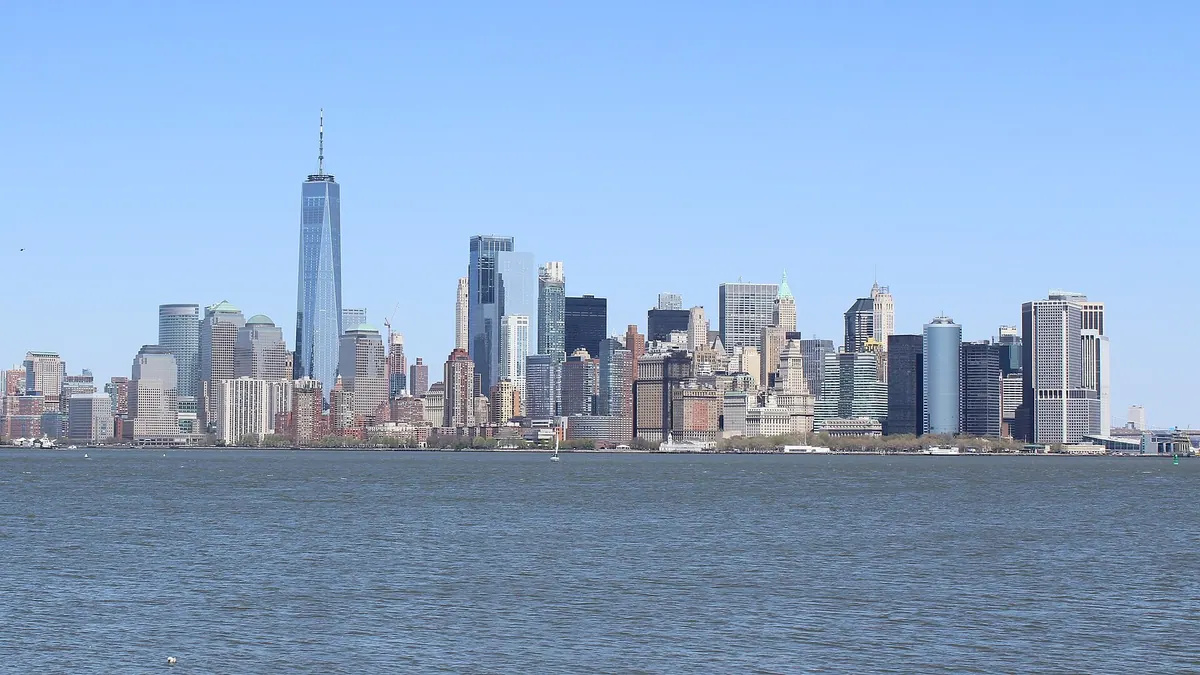
The Lower Manhattan skyline in New York City seen from New York Harbor
Lower Manhattan skyline. Photo by Percival Kestreltail, licensed under CC BY-SA 3.0, via Wikimedia Commons.
1 Accredited HVAC schools
$74,430 Median wage, NY
24,430 Jobs in NY

On this page

HVAC programs

Accredited HVAC schools and programs in New York

New York has 1 accredited HVAC school, accredited by HVAC Excellence or PAHRA. Ranks are national: an HVAC program shown at 6th sits 6th among all accredited HVAC programs in the country, not 6th in New York. It does not name EPA Section 608 preparation where it describes the program and does not hold both accreditations. These HVAC programs list their length, cost and credential wherever the school publishes them.

#1

Isaac Heating and Air Conditioning Inc.

Rochester, NY ยท Private Post-Secondary

68/100 ranking score
Credential Employer training program
Accreditation PAHRA , Partnership for Air-Conditioning, Heating, Refrigeration Accreditation
Apprenticeship

Isaac Heating and Air Conditioning is an HVAC employer, not a tuition charging school, so training here means getting hired first. The company describes itself as one of the fastest growing service providers in New York and says it remains committed to building a team of qualified HVAC technicians and installers, plumbers and electricians.

Training is the company's stated highest priority. Isaac claims its technicians receive more formal education in their first two years than most technicians get in a lifetime, a response to an industry where leading equipment manufacturers introduce up to 100 new products a year and equipment keeps growing more sophisticated. The company frames this investment as producing a better experience for clients.

Because trainees are employees, compensation comes with the training. Listed benefits include competitive wages, company vehicles for technicians, a 401k profit sharing retirement plan, health insurance and tuition reimbursement. Isaac is a past honoree of the Best Companies to Work for in New York State recognition from the New York State Society of Human Resource Management and has ranked in the top 25 among the state's large companies.

Sources: New York HVAC school program.

Willing to travel? Compare these New York HVAC programs against the best HVAC schools and programs nationally, or browse HVAC programs in another state.

New York City

Is there an HVAC license in New York City in 2026?

There is no HVAC licence in New York City. The Department of Buildings licenses master plumbers, journeyman plumbers, master fire suppression piping contractors, oil-burning equipment installers, high-pressure boiler operating engineers, master electricians, special electricians, welders, riggers, sign hangers and site safety personnel. It licenses no HVAC, mechanical or refrigeration contractor.

The permit category exists even though the licence does not. City law creates service equipment permits for the installation or alteration of service equipment including air conditioning and ventilating systems, boilers and elevators. So the work is permitted; the trade is not licensed under that name.

What that means in practice is that HVAC work in the city is split by what it touches. Gas piping and plumbing need a licensed master plumber with a gas work qualification. Sprinkler and standpipe work needs a master fire suppression piping contractor. Oil burners and boilers need an oil-burning equipment installer. The electrical connection needs a master electrician. Operating a large refrigerating system needs a certificate from the Fire Department. Filing the drawings needs a registered design professional.

Sources: NYC Department of Buildings, NYC Administrative Code title 28 chapter 4, FDNY certificates of qualification.

What a degree is worth

Does an engineering degree shorten New York City licensing in 2026?

An engineering degree shortens New York City licensing substantially, and in one case it is worth four years. The high-pressure boiler operating engineer licence normally takes five years of in-city experience within the prior seven. With a bachelor's degree in mechanical engineering from an accredited school or college, it takes one year. That is the steepest education-for-experience trade found anywhere in this research.

The master plumber licence follows a similar shape on a longer scale. The trade route is seven years within ten, including at least two as a registered journeyman plumber. With a bachelor's degree in mechanical engineering or an appropriate engineering technology, it is five years within seven, at least two of them in the city. If you are already a licensed architect or engineer it drops to three years within five. Master fire suppression piping uses the same structure with fire protection engineering added to the degree list.

The oil-burning equipment installer licence is the exception: four years of in-city experience under a licensed installer, with no education substitution at all. And the boiler engineer apprenticeship route carries an explicit anti-double-counting rule, that classroom training in the apprenticeship program shall not itself be considered practical experience.

Credited from a degree Experience required High-pressure boiler operating engineer, in years
Mechanical engineering degree 4 years 1 year No degree 5 years

Refrigerating systems

Who can operate a large refrigerating system in New York City in 2026?

A refrigerating system operating engineer certificate from the Fire Department is required to operate a large refrigerating system in New York City, and it is the one credential in the state that hard-requires EPA certification. The notice of examination states that federal regulations require an individual performing these duties to possess Universal Technician Certification under 40 CFR Part 82 Subpart F, which is the Section 608 program. Note the level: Universal, not Type I, II or III.

The threshold that triggers it is capacity. For systems installed since June 1957, more than 50 horsepower requires personal supervision, meaning someone physically in the building whenever the system runs. Separately, an aggregate above 100 horsepower for human comfort requires personal supervision, though that aggregate applies only within a single building under the sole direct control of one occupant, lessee or owner, and systems rated 15 horsepower or less are excluded from it.

Two features make this credential unlike a normal licence. It is premises-specific, valid only at a named work location, with each additional location costing another fee, and under personal supervision you cannot cover two buildings at once. And since July 2025 every renewal requires an A2L refrigerant training course of at least seven hours of live instruction with an exam at 70 percent, which is a response to the shift toward mildly flammable refrigerants.

Sources: FDNY certificates of qualification, EPA Section 608.

Buffalo

Does Buffalo have an HVAC license in 2026?

Buffalo does have an HVAC licence, and it is filed under Heating rather than under HVAC or Mechanical, which is why it is easy to miss. The city code creates a heating contractor licence in three classes: Class I for oil, gas and solid fuel, Class II for gas or solid fuel, and Class III for wood-burning fireplaces and stoves only. Air conditioning enters through the examination scope, which covers heating, ventilating and air conditioning guided by the ASHRAE standards.

School buys exactly one year. The code gives three routes: at least two years of practical experience installing heating equipment in the class applied for, or satisfactory completion of a course of study in heating equipment given by a recognized school plus one year of practical experience, or being a graduate engineer. The code does not define what a recognized school is, so confirm your program with the Board of Heating Examiners before relying on it.

The minimum age is 21, three years higher than New York City's 18, and the code says plainly that there are no exemptions from examination. The exam is written, oral and practical. A $10,000 bond is required, the licence runs $500 a year expiring 31 December, and a lapse of more than a year means re-examination. Buffalo's separate general contractor application states in bold that it does not allow HVAC work to be performed, which confirms the heating licence stands on its own.

Credited from school Practical experience Buffalo heating contractor, two years
Recognized school course 1 year 1 year No school credit 2 years

Sources: NYC Administrative Code title 28 chapter 4, Buffalo City Code chapter 238.

New York pay

How much do HVAC techs make in New York in 2026?

HVAC techs in New York make a median of $74,430 a year, more than $13,000 above the national median of $61,010. The Bureau of Labor Statistics counted 24,430 HVAC technician jobs in the state in its May 2025 wage survey, the fourth largest workforce in the country.

The bottom 10 percent earn $45,720 or less and the top 10 percent earn $114,180 or more, with the middle half between $56,930 and $97,340. That upper figure is nearly $19,000 above the national 90th percentile, one of the widest gaps of any state, and the 75th percentile alone clears the national 90th. Dense commercial building stock, strong union density in the city trades and the fragmented credential structure described above all point the same way. The survey measures earnings and offers no forecast of hiring.

New York United States Annual wage by percentile
10th $48,560 $40,050 25th $59,720 $48,360 Median $74,430 $61,010 75th $88,130 $77,060 90th $100,680 $95,210

Sources: BLS OEWS.

Pay detail

New York HVAC pay, top to bottom

New York HVAC pay runs from the bottom tenth to the top in the table below, and the median is only one number in that range. The state sits above the national median of $61,010. All figures are annual, from the Bureau of Labor Statistics OEWS release of May 2025 for occupation 49-9021.

PercentileNYUnited States
10th $48,560 $40,050
25th $59,720 $48,360
Median $74,430 $61,010
75th $88,130 $77,060
90th $100,680 $95,210

24,430 HVAC jobs in NY. OEWS is a wage survey and carries no employment projections

Sources

Where our New York HVAC school and program data comes from

Our New York HVAC school and program data comes from the sources listed below, each one linked so you can check it: the state's own board or statute for licensing, federal filings for the schools, the Bureau of Labor Statistics for wages, and each school's own published program page. Licensing research was verified 2026-07-30.

New York City Department of Buildings, licensing
nyc.gov
NYC Administrative Code title 28 chapter 4, licence articles
codelibrary.amlegal.com
NYC Fire Code 606, refrigerating system operating requirements
codelibrary.amlegal.com
FDNY certificates of qualification
nyc.gov
Buffalo City Code chapter 238, heating
ecode360.com
Buffalo Office of Fuel Devices
buffalony.gov
New York HVAC school programs
Each school's own published program, linked on its card

Licensing research verified 2026-07-30. Rules change, so confirm with the state board before enrolling

Other states

HVAC schools and programs in other states

HVAC schools and programs in other states are worth comparing, because licensing changes at the state line and a program that shortens the route to a license in New York may count for nothing one state over. Each page below covers that state's own rules, its pay, and the accredited HVAC schools in it.

A state appears here once its licensing rules have been read from that state's own board or statute. See all HVAC schools and programs by state or the national ranking.