Best HVAC Schools.com

Best HVAC Schools in Colorado (2026)

Colorado has only two accredited HVAC programs, a community college in Fort Collins and a national chain campus in Denver. Neither leads to a state licence, because Colorado carved heating and air conditioning out of its plumbing statute by name and licenses nobody. Its two big jurisdictions filled the gap in opposite ways. Denver wants eight years and 7,000 documented hours. The Pikes Peak region sets no numeric minimum and decides by committee.

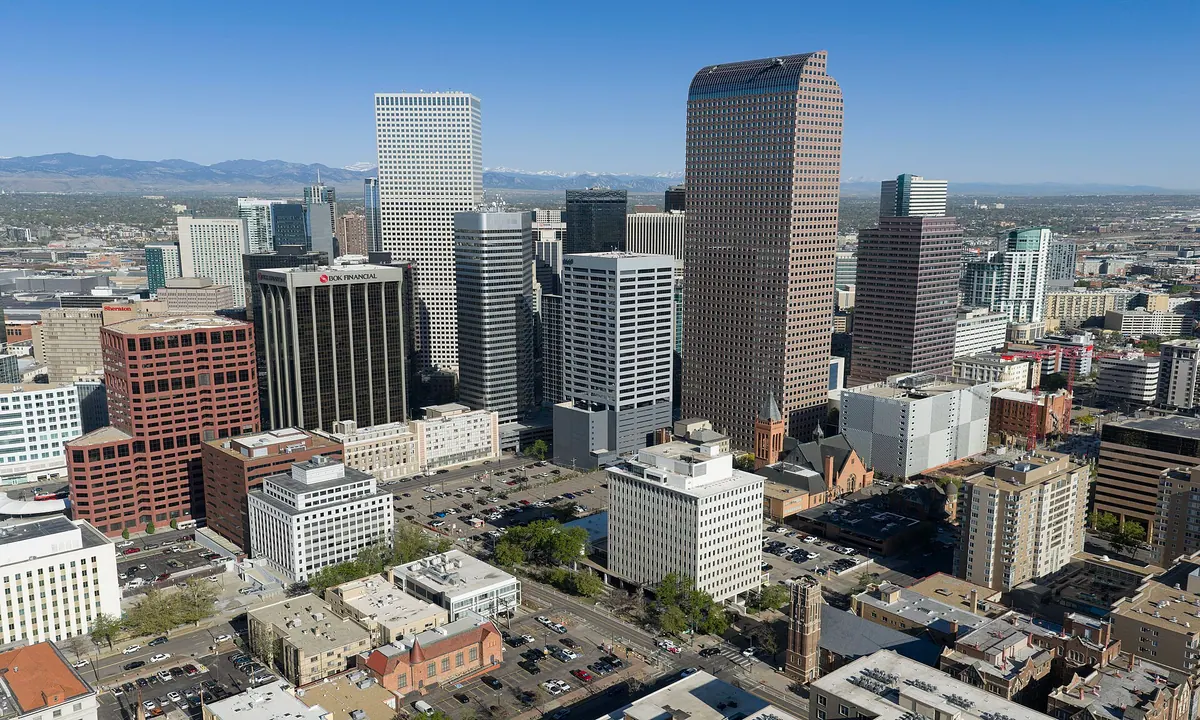
The Denver, Colorado skyline
Denver skyline. Photo by Quintin Soloviev, licensed under CC BY 4.0, via Wikimedia Commons.
2 Accredited HVAC schools
$65,200 Median wage, CO
8,940 Jobs in CO

On this page

HVAC programs

Accredited HVAC schools and programs in Colorado

Colorado has 2 accredited HVAC schools, each of them accredited by HVAC Excellence or PAHRA. Ranks are national: an HVAC program shown at 6th sits 6th among all accredited HVAC programs in the country, not 6th in Colorado. Of the 2, none name EPA Section 608 preparation where they describe the program and one holds both accreditations. These HVAC programs list their length, cost and credential wherever the school publishes them.

#1

Front Range Community College

Fort Collins, CO · Post Secondary

75/100 ranking score
Credential Associate's
Accreditation Both bodies , HVAC Excellence (a program of the ESCO Group) + Partnership for Air-Conditioning, Heating, Refrigeration Accreditation

PAHRA accreditation sets Front Range Community College apart: the college says its HVAC/R program is the only nationally accredited one in Colorado or Wyoming, and that the Partnership for Air Conditioning, Heating, Refrigeration Accreditation is the only accreditation supported by major industry associations. The full credential is an Associate of Applied Science in HVAC/R, 60 credits over four semesters at the Larimer campus, covering heating, ventilation, air conditioning and refrigeration systems along with troubleshooting.

Four certificates let students target a slice of the trade without committing to the full degree. Residential Air Conditioning and Heating runs 35 credits over three semesters and covers design, diagnosis, service and repair of home HVAC and hot-water heating systems. Light Commercial Air Conditioning and Heating is 37 credits and adds commercial building controls. Commercial Refrigeration, 28 credits over two semesters, trains on ice makers, walk-in coolers and freezers, and self-contained units.

Students who want a quick entry point can take the 15-credit HVAC/R Fundamentals certificate, a one-semester course in brazing and soldering, copper tubing fabrication, basic electrical skills and EPA certification. Graduates who want more schooling have a defined path too: FRCC holds a transfer agreement with Ferris State University in Michigan for its Bachelor of Science in HVAC/R Engineering Technology and Energy Management, which leads toward applications engineering, estimating and design roles.

Sources: Colorado HVAC school program, PAHRA, IPEDS.

#2

Lincoln (all campuses)

Denver, CO · Marietta, GA · Union, NJ · Post Secondary

63/100 ranking score
Credential Certificate and degree
Accreditation HVAC Excellence , a program of the ESCO Group

Lincoln Tech's Denver campus teaches Air Conditioning, Refrigeration, and Heating Systems Technology, the chain's core HVAC-R program, which is also offered at Lincoln campuses in other states. Training combines classroom instruction with lab work on industry-standard tools, covering heating systems and furnaces, air conditioning and refrigeration fundamentals, electrical theory and controls, ventilation and air distribution, installation and troubleshooting, and safety and environmental regulations. The school offers diploma, certificate and associate degree options, though availability varies by campus.

Industry partnerships give graduates paths beyond the diploma. Lincoln Tech works with Johnson Controls International, and graduates may qualify for specialized training programs at JCI Academy. Graduates can also apply to the Hussmann TechX Advanced Refrigeration Training Program to deepen skills in commercial refrigeration systems. The school notes that partnerships vary by campus, so Denver students should confirm which arrangements apply locally. These relationships also feed curriculum updates so training tracks current tools and technologies.

Graduates may qualify for entry-level roles such as HVAC-R technician, installer, maintenance technician, refrigeration technician and building maintenance technician, with potential employers including contractors, maintenance companies, facilities departments and service providers. Federal, state and private financial aid may be available along with Lincoln Tech scholarships; the school directs students to their local campus for specifics. The program targets residential, commercial and light industrial systems, and the curriculum is updated as efficiency standards, refrigerants and controls change.

One HVAC school program covers all 3 campuses, so this description applies to each. Class times and local detail differ, so confirm with the campus you would attend.

Sources: The school's HVAC program page.

Willing to travel? Compare these Colorado HVAC programs against the best HVAC schools and programs nationally, or browse HVAC programs in another state.

State licensing

Do you need a license to work as an HVAC tech in Colorado in 2026?

No, you do not need a state licence to work as an HVAC tech in Colorado, and the exclusion is deliberate rather than accidental. The Department of Regulatory Agencies licenses electricians and plumbers among its occupational programs, and lists no HVAC, mechanical or refrigeration credential. More tellingly, the Plumbers Practice Act says nothing in it requires a plumbing licence to perform the installation, extension, alteration or maintenance of building heating appliances and systems or air conditioning installations.

The reason the trade fragmented is visible in the same statutes. Electrical licensing is declared a matter of statewide concern, local examination is barred, and no fee may be charged for registration, which is why Denver's electrical licence costs nothing. HVAC has no equivalent protection, so every jurisdiction was free to build its own system, and several did.

Two state programs touch the edges without licensing installers. Gas piping runs through the plumbing statute, but only for new gas piping outside jurisdictions that run their own inspections, and the definition excludes installing gas appliances where service connections already exist. So a like-for-like furnace changeout on an existing stub sits outside it. The boiler inspection program regulates equipment and inspects it, but licenses nobody.

Sources: Colorado Plumbers Practice Act, Colorado Division of Professions and Occupations, Denver contractor licensing, CDLE boiler inspection program.

Denver

What does Denver require for HVAC work in 2026?

Denver requires two things in sequence for HVAC work: an individual supervisor certificate, then a contractor license held by a business that employs the certificate holder. The city states that an applicant must hold a supervisor certificate, or employ someone who does, before applying for a contractor licence.

The experience requirements are among the steepest anywhere. A Heating and Ventilating Class A supervisor needs eight years, four as a journeyman mechanic and four as a designer, draftsman or supervisor. The Class B residential version needs six. A Heating and Ventilating journeyman needs four years of field work with a minimum of 7,000 hours. All of it is proved by notarised letters from employers or clients, and you cannot be your own reference. The exams are ICC papers, F29 for Class A masters, F31 for journeymen, F32 for residential.

Contractor licences run three years at $250; supervisor certificates are $60 and journeyman certificates $40. The supervisor is legally tied to one contractor, must be employed by only one at a time, and acts as the contractor's agent. If they leave you notify the building official within three working days and replace them within thirty, or face suspension.

Denver supervisor and journeyman certificates
H&V Class A supervisor 8 years H&V Class B supervisor 6 years Journeyman 4 years Refrigeration operator 3 years

Sources: Denver contractor licensing.

Colorado Springs

Who licenses HVAC contractors in Colorado Springs in 2026?

The Pikes Peak Regional Building Department licenses HVAC contractors in Colorado Springs, not the city itself. It is a governmental authority created by an agreement between El Paso County and the city, governed by elected officials, and it covers unincorporated El Paso County along with Colorado Springs, Fountain, Manitou Springs, Woodland Park and several smaller towns. The city's own business licence list contains no mechanical or HVAC entry.

Its approach is the opposite of Denver's. For the mechanical contractor classes there is no numeric minimum experience at all. The code sets a minimum age of 18 and then issues a licence if the applicant is qualified by knowledge, training and experience in the opinion of a Board of Review, supported by three verified references. Only the individual Heating Mechanic tier carries a stated requirement, at one year of gas pipe fitting and servicing experience.

The process is unusually public. Applicants are published in the newspaper with public comment invited two weeks before consideration, and a judicial record check runs alongside. Fees are $50 to apply plus $100 per class, insurance is $1,000,000 per occurrence and $2,000,000 aggregate, and licences renew annually with escalating penalties, becoming a full re-application and re-examination after 180 days. The individual Heating Mechanic IV renewal requires six hours of approved technical training; the contractor classes require none.

Sources: Pikes Peak Regional Building Department, Denver contractor licensing.

Moving between jurisdictions

Does a Denver HVAC license work in Colorado Springs in 2026?

A Denver HVAC licence does not work in Colorado Springs. Pikes Peak answers the question directly in its own FAQ: asked whether it reciprocates a licence from another jurisdiction, the answer is no. A qualified Denver contractor requalifies from scratch 70 miles down the road, with a different application, a different fee schedule and a different standard of proof.

There is one strange point of contact. Pikes Peak's commercial refrigeration exam is ICC paper number 228, titled Colorado (Denver) Refrigeration Operator. Two jurisdictions that refuse to recognise each other's licences use the same custom-written exam, one of which is named after the other.

For anyone choosing where to train or work in Colorado, the practical advice is to decide the jurisdiction first and work backwards. Denver rewards documented hours, so an apprenticeship or a job with an employer who will write notarised letters matters most there. Pikes Peak rewards a case you can make to a board, where a completed program and credible references carry weight that raw hours might not.

Sources: Pikes Peak Regional Building Department, Denver contractor licensing.

Colorado pay

How much do HVAC techs make in Colorado in 2026?

HVAC techs in Colorado make a median of $65,200 a year, about $4,200 above the national median of $61,010. The Bureau of Labor Statistics counted 8,940 HVAC technician jobs in the state in its May 2025 wage survey, spread across the Front Range where nearly all of the licensing activity also sits.

The bottom 10 percent earn $42,930 or less and the top 10 percent earn $96,110 or more, with the middle half between $52,190 and $80,140. That ceiling edges past the national 90th percentile of $95,210, so despite having no state licence Colorado pays better than several states with demanding ones. The survey reports what current workers earn, and it does not forecast hiring.

Colorado United States Annual wage by percentile
10th $48,220 $40,050 25th $58,050 $48,360 Median $65,200 $61,010 75th $82,010 $77,060 90th $103,640 $95,210

Sources: BLS OEWS.

Pay detail

Colorado HVAC pay, top to bottom

Colorado HVAC pay runs from the bottom tenth to the top in the table below, and the median is only one number in that range. The state sits above the national median of $61,010. All figures are annual, from the Bureau of Labor Statistics OEWS release of May 2025 for occupation 49-9021.

PercentileCOUnited States
10th $48,220 $40,050
25th $58,050 $48,360
Median $65,200 $61,010
75th $82,010 $77,060
90th $103,640 $95,210

8,940 HVAC jobs in CO. OEWS is a wage survey and carries no employment projections

Sources

Where our Colorado HVAC school and program data comes from

Our Colorado HVAC school and program data comes from the sources listed below, each one linked so you can check it: the state's own board or statute for licensing, federal filings for the schools, the Bureau of Labor Statistics for wages, and each school's own published program page. Licensing research was verified 2026-07-30.

Colorado DORA, Division of Professions and Occupations
dpo.colorado.gov
Colorado Plumbers Practice Act, heating and air conditioning carve-out
dpo.colorado.gov
Denver contractor licenses and supervisor certificates
denvergov.org
Pikes Peak Regional Building Department, license types
pprbd.org
Pikes Peak Regional Building Code
pprbd.org
CDLE boiler inspection program
ops.colorado.gov
Colorado HVAC school programs
Each school's own published program, linked on its card

Licensing research verified 2026-07-30. Rules change, so confirm with the state board before enrolling

Other states

HVAC schools and programs in other states

HVAC schools and programs in other states are worth comparing, because licensing changes at the state line and a program that shortens the route to a license in Colorado may count for nothing one state over. Each page below covers that state's own rules, its pay, and the accredited HVAC schools in it.

A state appears here once its licensing rules have been read from that state's own board or statute. See all HVAC schools and programs by state or the national ranking.