Best HVAC Schools.com

Best HVAC Schools in Florida (2026)

Most accredited HVAC programs in Florida are technical colleges awarding industry certifications rather than degrees, which suits a state whose credential was never an academic one. Florida runs two contractor tracks, certified for statewide work and registered for local, and neither is a technician licence. What a Florida technician actually carries is a county or city journeyman card, which state law then makes portable everywhere in Florida.

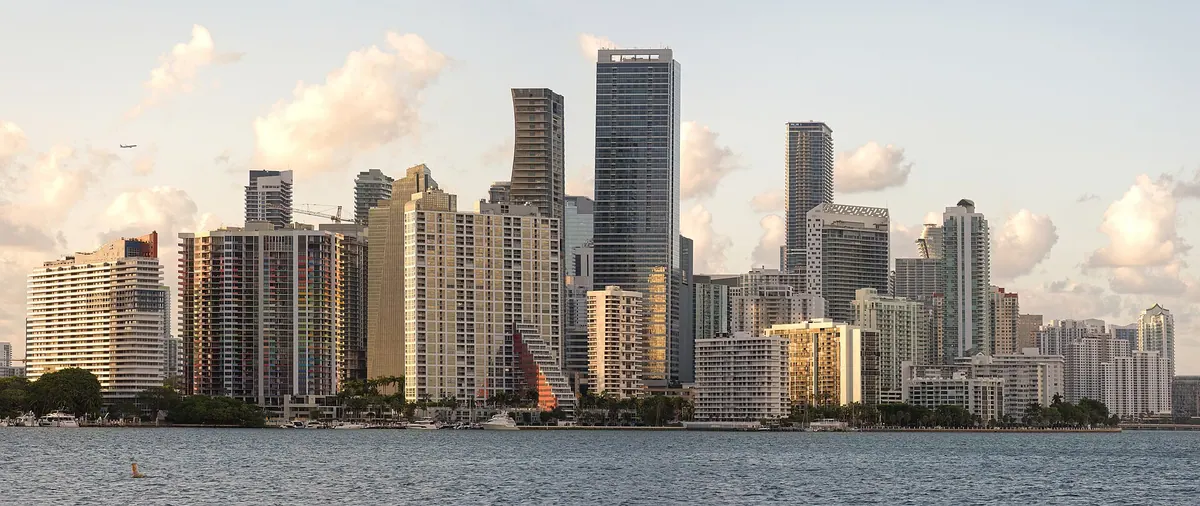
The Miami, Florida skyline
Miami skyline. Photo by Wilfredor, released under CC0, via Wikimedia Commons.
6 Accredited HVAC schools
$56,670 Median wage, FL
39,160 Jobs in FL

On this page

HVAC programs

Accredited HVAC schools and programs in Florida

Florida has 6 accredited HVAC schools, each of them accredited by HVAC Excellence or PAHRA. Ranks are national: an HVAC program shown at 6th sits 6th among all accredited HVAC programs in the country, not 6th in Florida. Of the 6, 4 name EPA Section 608 preparation where they describe the program and none hold both accreditations. These HVAC programs list their length, cost and credential wherever the school publishes them.

#1

Lively Technical College

Tallahassee, FL · Post Secondary

90/100 ranking score
Credential Industry certifications
Accreditation HVAC Excellence , a program of the ESCO Group
EPA 608 prepApprenticeshipR-410A

A sixteen year old in Tallahassee can enroll here, since admission turns only on age and basic skills scores in math and reading, and Florida puts no technician license between a graduate and a paycheck because the state regulates contracting businesses rather than the people on their trucks. The program aims squarely at that first rung, naming HVAC-R helpers, mechanic assistants, mechanics, and technicians as the positions it prepares students to fill.

Training builds the trade's physical fundamentals: identifying, using, and maintaining industry tools, fabricating and servicing piping, tubing, and fittings, and handling basic electricity and the electrical components inside heating and cooling equipment. Accreditation comes from two directions, HVAC Excellence and a national ESCO Institute award the program has held since 1999. Since any job that involves refrigerants requires the federal EPA Section 608 certification, students can sit that exam at the school itself.

Charges are spread over two semesters, with registration, facility usage, and lab fees billed each term and the tool kit purchase landing in the first semester only. The college also runs scholarships, including need-based awards and others tied to specific fields of study. What comes after graduation is a local credential: Florida technicians carry a journeyman card issued by a county or city, and once you hold one, state law makes it good everywhere in Florida.

Sources: Florida HVAC school program, EPA Section 608, HVAC Excellence.

#2

Traviss Technical College

Lakeland, FL · Post Secondary

81/100 ranking score
Credential Industry certifications
Accreditation HVAC Excellence , a program of the ESCO Group
EPA 608 prepNATEOSHA

A two-part clock-hour sequence, Traviss Technical College's HVAC/R training starts with a 750 hour HVAC/R 1 program covering Introduction to HVAC/R, HVAC/R Fundamentals, and HVAC/R Service Practices, each 250 hours. A second 600 hour HVAC/R 2 program adds intermediate and advanced service practices, with an advanced commercial and industrial option. HVAC/R 1 is a prerequisite for HVAC/R 2, and the sequence is organized around Occupational Completion Points that mark early exit points tied to employment.

Florida residents pay $3,965 for HVAC/R 1 at the Winter Lake Road campus in Lakeland and $2,374 for HVAC/R 2; non-resident prices are $12,388 and $9,112. Day classes run Monday through Friday from 7:30 AM to 1:30 PM, with an evening option on Tuesdays and Thursdays from 5:30 to 9:00 PM. Certification testing is built in: HVAC/R 1 students must test for EPA Section 608 certification and OSHA 10, while HVAC/R 2 students test for Employment Ready Electrical and Air Conditioning and Heat Pump exams.

Admission is open to adults and dual-enrolled high school students age 16 or older, accepted first come, first served after a CASAS assessment if applicable and an interview with a Traviss counselor. Dual-enrolled students earn 0.5 elective credit toward their high school record for every 75 hours of coursework. The NATE Core Exam is optional but encouraged for HVAC/R 2 students, and Polk County wage data cited by the college puts the occupation's average at $22.03 an hour.

Sources: Florida HVAC school program, EPA Section 608, NATE, OSHA.

#3

Wilton Simpson Technical College

Brooksville, FL · Post Secondary

81/100 ranking score
Credential Certificate
Accreditation HVAC Excellence , a program of the ESCO Group
EPA 608 prepR-410A

Evening-only scheduling makes this 750 hour HVAC/R program workable for people holding a day job: classes meet Monday through Thursday from 4 to 9 PM over 38 weeks at Central High School in Brooksville. The curriculum runs through three 250 hour courses, Introduction to HVAC/R, HVAC/R Fundamentals, and HVAC/R Service Practices, mixing classroom and shop instruction in the principles behind commercial and residential air conditioning and refrigeration systems.

In-state tuition is $2.44 per program hour across the 750 hours, with out-of-state students paying $9.32 per hour; the college notes tuition and fees are subject to change. The program is accredited by HVAC Excellence, and students prepare for the ESCO Institute EPA 608 and R-410A Safety certifications along with HVAC Excellence Employment Ready exams in Electrical and Air Conditioning and Heat Pump.

Completion requires passing every course and meeting Florida's basic skills levels for the program: grade 10 in math and grade 9 in language and reading. Graduates are prepared for entry level work as installers or mechanics in the air conditioning, refrigeration, and heating trades, and the program also serves as supplemental training for people already employed in the field. A work uniform of closed toe shoes, work pants, and a work shirt is required.

Sources: Florida HVAC school program, EPA Section 608, HVAC Excellence.

#4

Withlacoochee Technical College

Inverness, FL · Post Secondary

72/100 ranking score
Credential Industry certifications
Accreditation HVAC Excellence , a program of the ESCO Group
EPA 608 prep

At 1,350 hours, the HVAC and refrigeration program at Withlacoochee Technical College in Inverness goes beyond basic residential service. Coursework covers electrical theory and application, electrical circuits, troubleshooting, line sets, and fabrication of duct systems, along with component identification and comprehension of both air conditioning and commercial refrigeration systems, plus field style techniques meant to reflect work outside the shop.

Commercial refrigeration equipment features prominently in the listed program content. Students work with commercial ice machines, restaurant style equipment, and walk-in coolers and freezers in addition to residential and commercial air conditioning components. The program presents itself as preparation to secure the skills and credentials needed to enter and advance in the HVAC industry, which makes the equipment list worth reading closely if food service refrigeration interests you.

Certification preparation targets HVAC Excellence exams in heat pumps, gas heat, air conditioning, and electrical theory, plus EPA Section 608 certification through an EPA approved certifying program. The college does not publish tuition figures, schedules, or start dates on the program page itself, but it links a cost sheet and a program information sheet, so request both before comparing this program against alternatives on price or format.

Sources: Florida HVAC school program, EPA Section 608, HVAC Excellence.

#5

Palm Beach State College

Lake Worth, FL · Post Secondary

63/100 ranking score
Credential Certificate and degree
Accreditation HVAC Excellence , a program of the ESCO Group
Evening or part-time

No high school diploma or GED is required to enroll in Palm Beach State College's 1,350 clock hour HVAC career certificate, though federal financial aid still requires one. Applicants complete an admission application, take the TABE exam unless exempt, attend a program information session, and meet with the Trade and Industry advisor. Passing TABE scores of 9 in reading, 9 in language, and 10 in mathematics, or an exemption, are required to finish the program.

The program runs at the Lake Worth campus in two formats: a 45 week day schedule or a 70 week evening schedule. Eleven courses total 1,350 clock hours across three terms, moving from fundamentals and equipment operation through electrical systems and troubleshooting, installation and start-up, heating service, and commercial systems. The final summer term is devoted entirely to commercial and industrial refrigeration, including a 100 hour course on maintaining and troubleshooting commercial refrigeration systems.

Shop and laboratory work is integral throughout, with instruction in safety procedures and the tools, equipment, and materials used in the industry. The curriculum stresses broad, transferable skills and covers labor issues, health, safety, and environmental topics alongside system operation and repair. Tuition is not published on the catalog page.

Sources: Florida HVAC school program.

#6

Technical Education Center of Osceola

Kissimmee, FL · Public Post-Secondary

63/100 ranking score
Credential Industry certifications
Accreditation PAHRA , Partnership for Air-Conditioning, Heating, Refrigeration Accreditation
NATEOSHAEvening or part-time

Nine months of full-time study, roughly, completes the 750 hour HVAC/R 1 program at Technical Education Center of Osceola in Kissimmee, with an estimated cost of $5,384.33. The full-time schedule runs Monday, Tuesday, Thursday, and Friday from 7:05 AM to 2:00 PM and Wednesdays until 1:00 PM; an evening track meets Monday, Tuesday, and Thursday from 4:30 to 8:30 PM. Part-time enrollment is offered for dual enrollment students only.

Coursework follows three Occupational Completion Points: Introduction to HVAC/R, HVAC/R Fundamentals, and HVAC/R Service Practices, each 250 hours, covering the design, testing, and repair of heating, ventilation, air conditioning, and refrigeration systems. The school advises students to obtain EPA certification before leaving, since any job involving work with refrigerants requires it, and the program also lists NATE and OSHA among its credentials.

Applicants take the CTE Basic Skills Assessment, with required levels of 9 in reading, 9 in language, and 10 in math. The curriculum stresses broad, transferable skills across the Architecture and Construction career cluster, including planning, management, finance, and safety alongside technical work. Completers who continue into an associate in science program may be eligible for articulated credits, a practical path for anyone considering a degree after entering the trade.

Sources: Florida HVAC school program, NATE, OSHA.

Willing to travel? Compare these Florida HVAC programs against the best HVAC schools and programs nationally, or browse HVAC programs in another state.

Certified and registered

What kind of HVAC license does Florida issue in 2026?

The kind of HVAC license Florida issues is a contractor license, on two tracks, and there is no technician license at all. A certified license comes from passing the state exam and lets you work anywhere in Florida; you show the local building official your certificate and pay the local occupational fee. A registered license involves no state examination, and it only lets you contract in the counties, municipalities or districts where you have complied with local licensing requirements.

The Construction Industry Licensing Board grades air conditioning work by capacity. Class A is unlimited. Class B is limited to 25 tons of cooling and 500,000 BTU of heating in any one system. Class C covers servicing only, and it is closed: state law restricts it to people who were already registered or certified as Class C on 1 October 1988, so anyone finding it in older material should know it is not available. A separate and broader mechanical contractor category also covers air conditioning, refrigeration and heating.

Moving between classes is easier than starting fresh. A certified Class B contractor needs only one year in the classification to sit the Class A exam, and a Class C holder needs three years for Class B or four for Class A.

Sources: Florida CILB, Florida Statutes 489.111.

What it takes

What does a Florida HVAC contractor license require in 2026?

A Florida HVAC contractor license requires four years of experience with at least one year as a foreman, plus the exam, fingerprinting and proof of financial responsibility. The state counts a year of experience as 2,000 hours. Insurance for air conditioning categories runs $100,000 of liability and $25,000 of property damage, and any bond the board requires is capped at $20,000 for this division.

The financial check catches people out. Applicants submit a credit report, and a FICO score below 660 means completing a board-approved 14-hour financial responsibility and stability course instead. It is a real requirement rather than a formality, and it is worth knowing before you apply rather than after.

Licenses renew every two years on 31 August, with certified licenses renewing in even-numbered years and registered ones in odd-numbered years. Continuing education is at least 14 classroom hours per biennium, including one hour on cementitious cladding, stucco, plastering and lath.

Sources: DBPR construction FAQs.

School credit

Does HVAC school or college credit count toward a Florida license in 2026?

College credit counts toward a Florida HVAC license and can replace up to three of the four years. The statute sets out the combinations directly. A baccalaureate in engineering, architecture or building construction plus one year of proven experience qualifies. One year as a foreman plus three years of college credits qualifies. One year as a worker, one as a foreman and two years of college credits qualifies. Two years as a worker, one as a foreman and one year of college credits qualifies.

What every combination keeps is the foreman year, or its equivalent in the degree route. Florida is willing to trade classroom time for field time but not for supervisory responsibility, which is a reasonable line and a useful one to plan around: a program plus a deliberate move into a lead position beats a program alone.

Military service counts on the same basis as college credit. The board states the substitution ceiling as three of the four years however you reach it, so no combination of schooling gets you to the exam without real work behind it.

Credited from college Experience still required Four years, of which three can come from school
Degree in a related field 3 years 1 year 3 years college credits 3 years 1 year 2 years college credits 2 years 2 years 1 year college credits 1 year 3 years No college credit 4 years

Sources: Florida Statutes 489.111, DBPR construction FAQs.

The local journeyman card

Is there a journeyman HVAC license in Florida in 2026?

There is a journeyman HVAC license in Florida, but counties and municipalities issue it rather than the state. State law authorises them to license journeymen in the plumbing, pipe fitting, mechanical and HVAC trades, and sets the bar: a state-approved apprenticeship or at least 12,000 hours of on-the-job training, plus at least 75 percent on an approved proctored exam.

The part that makes it worth having is portability. The same statute requires counties and municipalities to recognise anyone already issued a journeyman license in that trade by another Florida county or municipality. So one local card is good across the state, which is unusual: in most states a city credential stops at the city line.

Miami-Dade County runs one of the more developed local boards, certifying air conditioning contractors and issuing journeyman and maintenance certificates on three years of field experience, of which not more than half may be education equivalent, with a 75 percent exam. If you are training in Florida with no intention of contracting, the local journeyman route is the credential to aim at.

Sources: Florida Statutes 489.1455, Florida Statutes 489.111.

Florida pay

How much do HVAC techs make in Florida in 2026?

HVAC techs in Florida make a median of $56,670 a year, about $4,300 below the national median of $61,010. The Bureau of Labor Statistics counted 39,160 HVAC technician jobs in the state in its May 2025 wage survey, more than any other state in the country, which is what a year-round cooling load and continuous construction produce.

The bottom 10 percent earn $37,470 or less and the top 10 percent earn $81,090 or more, with the middle half between $46,090 and $69,270. Florida's ceiling sits roughly $14,000 under the national 90th percentile of $95,210, so this is the clearest example on the site of a deep market rather than a high-paying one: more jobs than anywhere, at pay below the national middle. The survey describes current pay and does not forecast hiring.

Florida United States Annual wage by percentile
10th $38,370 $40,050 25th $46,830 $48,360 Median $56,670 $61,010 75th $63,620 $77,060 90th $78,210 $95,210

Sources: BLS OEWS.

Pay detail

Florida HVAC pay, top to bottom

Florida HVAC pay runs from the bottom tenth to the top in the table below, and the median is only one number in that range. The state sits below the national median of $61,010. All figures are annual, from the Bureau of Labor Statistics OEWS release of May 2025 for occupation 49-9021.

PercentileFLUnited States
10th $38,370 $40,050
25th $46,830 $48,360
Median $56,670 $61,010
75th $63,620 $77,060
90th $78,210 $95,210

39,160 HVAC jobs in FL. OEWS is a wage survey and carries no employment projections

Sources

Where our Florida HVAC school and program data comes from

Our Florida HVAC school and program data comes from the sources listed below, each one linked so you can check it: the state's own board or statute for licensing, federal filings for the schools, the Bureau of Labor Statistics for wages, and each school's own published program page. Licensing research was verified 2026-07-30.

Florida Construction Industry Licensing Board
www2.myfloridalicense.com
Florida Statutes 489.105, contractor classifications
leg.state.fl.us
Florida Statutes 489.111, eligibility and education substitution
flsenate.gov
Florida Statutes 489.1455, local journeyman licenses
leg.state.fl.us
DBPR construction industry FAQs
www2.myfloridalicense.com
Florida HVAC school programs
Each school's own published program, linked on its card

Licensing research verified 2026-07-30. Rules change, so confirm with the state board before enrolling

Other states

HVAC schools and programs in other states

HVAC schools and programs in other states are worth comparing, because licensing changes at the state line and a program that shortens the route to a license in Florida may count for nothing one state over. Each page below covers that state's own rules, its pay, and the accredited HVAC schools in it.

A state appears here once its licensing rules have been read from that state's own board or statute. See all HVAC schools and programs by state or the national ranking.