Best HVAC Schools.com

Best HVAC Schools in West Virginia (2026)

West Virginia accredits three HVAC programs, two of them public career and technical centres and one a community college. Public school career training is worth more here than in most states, because the statute caps what a technician may be asked to document at 2,000 hours, and career technical education from West Virginia public schools counts toward that total.

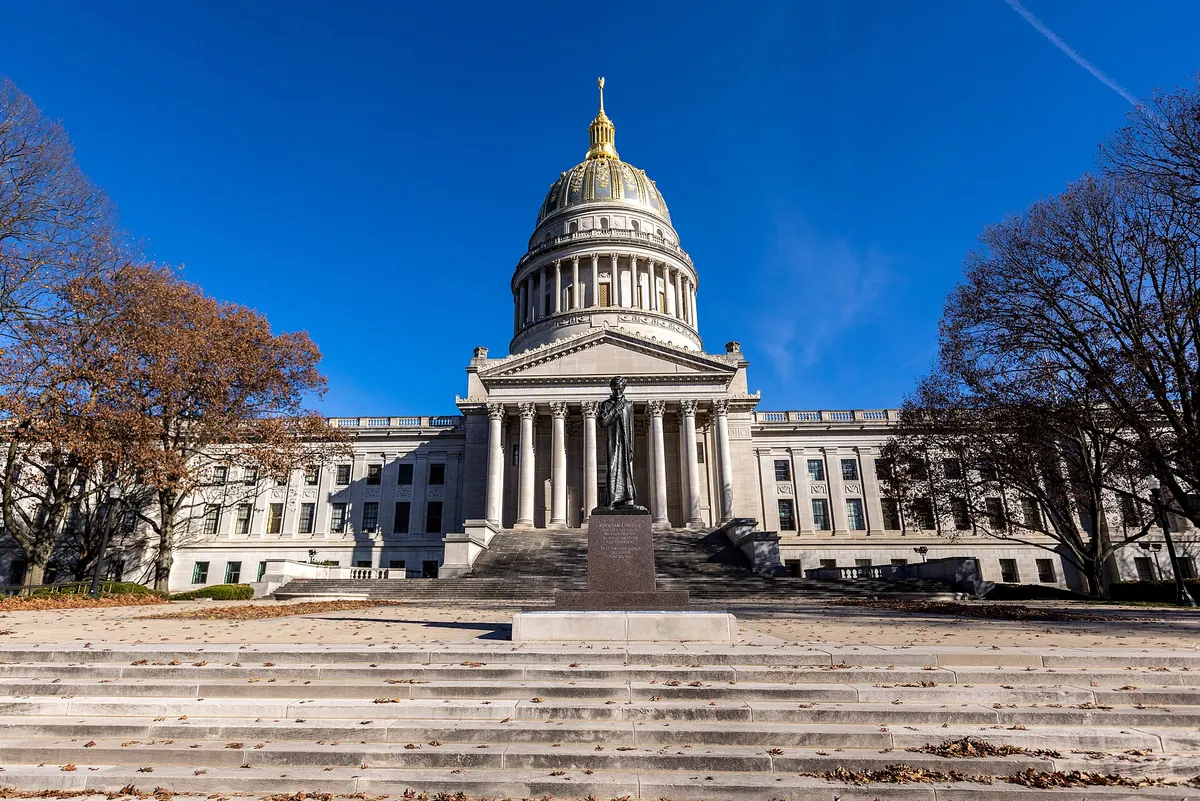
The West Virginia State Capitol building in Charleston
West Virginia State Capitol in Charleston. Photo by Daniel G Rego, licensed under CC BY-SA 4.0, via Wikimedia Commons.
3 Accredited HVAC schools
$48,850 Median wage, WV
1,690 Jobs in WV

On this page

HVAC programs

Accredited HVAC schools and programs in West Virginia

West Virginia has 3 accredited HVAC schools, each of them accredited by HVAC Excellence or PAHRA. Ranks are national: an HVAC program shown at 6th sits 6th among all accredited HVAC programs in the country, not 6th in West Virginia. Of the 3, one names EPA Section 608 preparation where they describe the program and none hold both accreditations. These HVAC programs list their length, cost and credential wherever the school publishes them.

#1

Ben Franklin Vocational Center

Dunbar, WV · Public Secondary

84/100 ranking score
Credential Certificate and degree
Accreditation PAHRA , Partnership for Air-Conditioning, Heating, Refrigeration Accreditation
EPA 608 prepOSHAEvening or part-time

West Virginia will not ask a technician to document more than 2,000 hours, and career technical education from its own public schools counts toward that total. The arithmetic favors Ben Franklin's evening program in Dunbar: 1,080 hours packed into a single August-to-May year, delivered in six-hour weeknight sessions, more than half of everything the state can require you to prove.

Instruction follows Modern Refrigeration and Air Conditioning, 21st edition, across three courses. The opening 450 hours build refrigeration fundamentals, refrigerants, basic electricity and electronics, and heating, along with OSHA 10 and preparation for the federal EPA Section 608 certification. A second 450-hour course moves into domestic refrigerators and freezers, indoor air, energy management, and commercial refrigeration design, installation, and service. The closing 180 hours bring troubleshooting, a special project build, and review for the West Virginia Division of Labor technician exam, which students sit before the program ends.

Admission takes a passing score on the TABE entrance exam in reading and math, a government-issued ID, a high school diploma or equivalency, the ability to lift 50 pounds, and turning 18 before the second semester. Payment arrangements are available, and the school urges every applicant to file a FAFSA. The school currently lists the August 2026 class as cancelled while 2026-27 application materials remain posted, so verify that a cohort is running before you plan around one.

Sources: West Virginia HVAC school program, EPA Section 608, OSHA.

#2

West Virginia Northern Community College

Wheeling, WV · Post Secondary

59/100 ranking score
Credential Associate's
Accreditation HVAC Excellence , a program of the ESCO Group

Offered at the Wheeling and Weirton campuses, West Virginia Northern Community College's Refrigeration, Air Conditioning and Heating Technology program leads to an Associate in Applied Science degree. The program is built to provide the technical knowledge and skills required of people employed in the air conditioning, heating, and refrigeration businesses and industries.

Graduates are prepared to find employment in residential, commercial, and industrial air conditioning, heating, and refrigeration work, spanning installation, maintenance, and service roles. The college groups the degree under its Construction, Manufacturing, Energy, and Transportation career pathway, alongside its other trade and technical programs, and accepts applications online.

The program page is thin on specifics: it does not publish credit totals, program length, tuition for the degree, or certification outcomes, so plan to request that information from the college directly before comparing it against other options. WVNCC operates campuses in Wheeling, Weirton, and New Martinsville, though this degree is listed only for Wheeling and Weirton.

Sources: West Virginia HVAC school program, IPEDS.

#3

Carver Career Center

Charleston, WV · Public Post-Secondary

55/100 ranking score
Credential Career and technical program
Accreditation PAHRA , Partnership for Air-Conditioning, Heating, Refrigeration Accreditation

This West Virginia career and technical center offers HVAC as one of its secondary programs for high school students, listed alongside trades such as electrical technician, plumbing, carpentry, welding, and automotive technology. Carver Career Center runs its shops under the state's Simulated Workplace model, an initiative the West Virginia Department of Education designed with business and industry committees across the state.

Simulated Workplace means students operate under workplace protocols that mirror West Virginia workforce requirements, including random drug testing, professionalism standards, attendance expectations, and safety rules. Students take ownership of their individual performance as it affects the whole class, and local business and industry experts join on-site review teams that evaluate whether programs are meeting employer needs and expectations.

Details specific to the HVAC program itself, such as course content, length, certifications, or how adult students might enroll, are not published on this general program listing; the center links each program to its own page and posts a secondary student handbook and application process for prospective students. As a secondary center, Carver's offerings are aimed at high school students, so adults should confirm eligibility before applying.

Sources: West Virginia HVAC school program.

Willing to travel? Compare these West Virginia HVAC programs against the best HVAC schools and programs nationally, or browse HVAC programs in another state.

State certification

Do you need a license to work as an HVAC tech in West Virginia in 2026?

Yes, you need a state certification to work as an HVAC tech in West Virginia, and it belongs to you rather than to your employer. The Division of Labor certifies individuals at three levels. An HVAC Technician may work on residential and non-residential systems unsupervised. An HVAC Residential Technician covers residential systems and may work on non-residential systems only under the direct supervision of a full technician. An HVAC Technician in Training works only under the direction and control of a technician.

The full technician certification takes 2,000 hours of HVAC work, training or experience, and a passing exam score of 70 percent. The trainee tier requires no exam at all, which is the entry point while you accumulate hours. Annual fees are $75 for a technician, $25 for a trainee, and either $50 or $60 for a residential technician: the Division's fee page and its legislative rule give different figures, so confirm the current amount with the Division before applying.

There is a second layer at business level. Individuals hold the Division of Labor certification; the company holds a contractor licence with an HVAC classification from the Contractor Licensing Board. If you work for someone else, the first is yours and the second is theirs. If you go out on your own, you need both. One useful economy: there is no fee for a technician certification if you already hold an HVAC contractor licence.

Sources: West Virginia Division of Labor, West Virginia Contractor Licensing Board.

The 2,000-hour cap

Does HVAC school count toward West Virginia certification in 2026?

HVAC school counts toward West Virginia certification, and the rules name the state's own public schools directly. Training and experience may include completing an HVAC-related training program acquired through career technical education provided by the state's public schools, an apprenticeship program, or an employer-sponsored program. School is not a separate substitution here; it feeds the same 2,000-hour total that work does.

The cap is what makes this generous. The statute states that an HVAC technician may not be required to provide documentation of more than 2,000 hours. That is a ceiling on the paperwork, not just on the requirement, and it protects applicants from a board asking for more than the rule contemplates.

Service members get a full substitution rather than a partial one. A service member may submit proof of a course qualifying them for rating as an HVAC technician or an equivalent rating in lieu of proof of the 2,000 hours. West Virginia will also license without examination on experience gained in states that do not license the trade at all, which is unusually accommodating given how many states on this site fall into that category.

Counted from training Hours still to accumulate Training and work feed the same 2,000-hour total
Qualifying military course 2000 years CTE or apprenticeship hours Illustrative split 1000 years 1000 years Work experience only 2000 years

Sources: West Virginia Code 21-16, 42CSR34, HVAC certification rule.

What the certification does not cover

What work does a West Virginia HVAC certification exclude in 2026?

A West Virginia HVAC certification excludes refrigeration lines, steam lines and hydronics, which is narrower than most people expect from an HVAC credential. The rules define HVAC work without them, so holding this certification does not authorise you to do hydronic or refrigeration piping. If your work runs into those systems, check what additional credential applies before assuming this one covers it.

The non-residential boundary is defined by numbers rather than by building type. Work counts as non-residential where more than four units combine above 20 tons or 520,000 BTU, where a commercial space exceeds 5,000 square feet, where fire dampers are required, or on packaged rooftop units. That decides which of the two certification levels a given job needs.

Supervision ratios differ by setting: on residential work one technician may supervise up to four trainees, but on non-residential work only two. Four statutory exemptions apply, covering work on your own or an immediate family member's single-family home, in-house employees at a manufacturing plant or industrial establishment, licensed electricians and plumbers within their own scope including thermostats and bathroom fans, and routine maintenance.

Sources: 42CSR34, HVAC certification rule.

Renewal and local rules

Can West Virginia cities require their own HVAC license in 2026?

West Virginia cities cannot require their own HVAC licence. The statute is explicit that a political subdivision may not require a person holding a valid current licence under the article to have any other licence or evidence of competence. That makes the state certification genuinely portable within West Virginia.

Certification runs one year, with a renewal notice 45 days ahead, and there is no continuing education requirement. The hard limit worth knowing: a licence expired for 90 days or more cannot be renewed at all, so a lapse past three months means starting over rather than paying a penalty.

Reciprocity is discretionary rather than automatic, and the Division decides case by case. That cuts both ways given the state's willingness to credit experience from non-licensing states.

Sources: West Virginia Code 21-16.

West Virginia pay

How much do HVAC techs make in West Virginia in 2026?

HVAC techs in West Virginia make a median of $48,850 a year, roughly $12,200 below the national median of $61,010 and among the lowest in the country. The Bureau of Labor Statistics counted 1,690 HVAC technician jobs in the state in its May 2025 wage survey, one of the smallest workforces of any state with accredited programs.

The bottom 10 percent earn $34,690 or less and the top 10 percent earn $77,150 or more, with the middle half between $40,120 and $61,650. The whole range sits low, and the small workforce means fewer employers competing for people. Worth weighing against the fact that the certification here is comparatively quick to obtain and that neighbouring states pay considerably more. These are current wages and not a forecast.

West Virginia United States Annual wage by percentile
10th $36,160 $40,050 25th $38,400 $48,360 Median $48,850 $61,010 75th $60,790 $77,060 90th $72,640 $95,210

Sources: BLS OEWS.

Pay detail

West Virginia HVAC pay, top to bottom

West Virginia HVAC pay runs from the bottom tenth to the top in the table below, and the median is only one number in that range. The state sits below the national median of $61,010. All figures are annual, from the Bureau of Labor Statistics OEWS release of May 2025 for occupation 49-9021.

PercentileWVUnited States
10th $36,160 $40,050
25th $38,400 $48,360
Median $48,850 $61,010
75th $60,790 $77,060
90th $72,640 $95,210

1,690 HVAC jobs in WV. OEWS is a wage survey and carries no employment projections

Sources

Where our West Virginia HVAC school and program data comes from

Our West Virginia HVAC school and program data comes from the sources listed below, each one linked so you can check it: the state's own board or statute for licensing, federal filings for the schools, the Bureau of Labor Statistics for wages, and each school's own published program page. Licensing research was verified 2026-07-30.

West Virginia Division of Labor, HVAC technician certification
labor.wv.gov
42CSR34, HVAC technician certification rule
labor.wv.gov
West Virginia Code article 21-16, HVAC licensing
code.wvlegislature.gov
Division of Labor HVAC certification fees
labor.wv.gov
West Virginia Contractor Licensing Board
wvclboard.wv.gov
West Virginia HVAC school programs
Each school's own published program, linked on its card

Licensing research verified 2026-07-30. Rules change, so confirm with the state board before enrolling

Other states

HVAC schools and programs in other states

HVAC schools and programs in other states are worth comparing, because licensing changes at the state line and a program that shortens the route to a license in West Virginia may count for nothing one state over. Each page below covers that state's own rules, its pay, and the accredited HVAC schools in it.

A state appears here once its licensing rules have been read from that state's own board or statute. See all HVAC schools and programs by state or the national ranking.